
I. Applications:
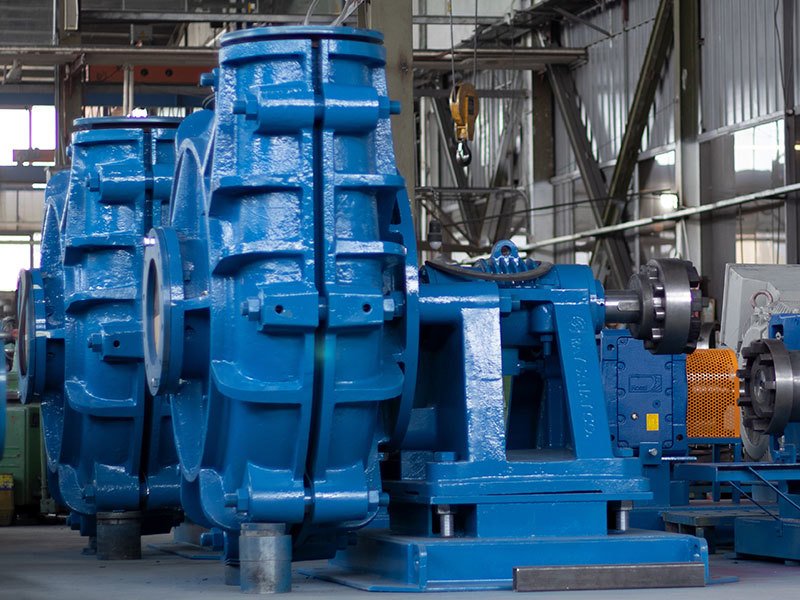
Parallel operation of slurry pumps is a working method in which the outlets of two or more pumps deliver fluid to the same pressure pipeline. The purpose of parallel operation is to increase the flow rate.
It is typically used in the following situations:
1. When the liquid supply cannot be interrupted, and for safety reasons, it is used as a backup pump;
2. When the flow rate is too large, it is difficult to manufacture using a single pump, and the cost would be too high.
Or in situations where power start-up is limited;
3. When project expansion requires increased flow rate;
4. When external loads vary greatly, requiring adjustment of the number of pumps;
5. When it is necessary to reduce the capacity of the backup pump.
II. Precautions for Slurry Pump Operation
1. When slurry pumps are operated in parallel, it is best that the pump discharge heads are the same or very close;
To avoid the pump with the smaller head having little or no effect, two pumps with the same performance should be operated in parallel.
2. When pumps are operating in parallel, the inlet and outlet pipes should be approximately symmetrical to avoid reduced pump efficiency due to high pipe resistance.
3. Pay attention to the flow rate when selecting pumps; otherwise, the optimal efficiency point (BEP) will not be reached during parallel operation.
4. Pay attention to the matching power of the pumps. If only one pump is operating, the matching power should be selected based on the flow rate to prevent overloading of the prime mover.
5. To achieve a greater flow rate after parallel operation, the diameter of the outlet pipe should be increased to reduce the resistance coefficient and meet the increased flow rate requirements.