
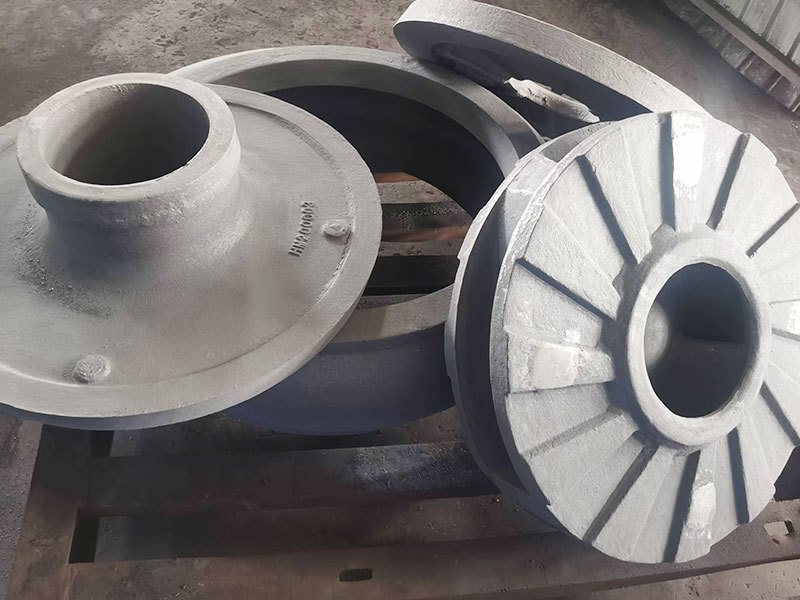
What is an impeller?
An impeller is a rotating component of a pump, primarily used in centrifugal pumps. Its rotation drives fluid flow. Impellers are mainly made of metal and rubber, possessing wear-resistant and corrosion-resistant properties.
How does an impeller work?
During the operation of a centrifugal pump, the impeller is responsible for converting the mechanical energy of the motor into the kinetic and pressure energy of the fluid.
The impeller’s rotation generates centrifugal force, drawing fluid into the impeller’s center. As the impeller rotates, the fluid is thrown outwards, increasing its velocity. Simultaneously, the fluid’s kinetic energy is converted into pressure energy, and it is discharged from the pump outlet.
Types of impellers
1. Open impeller
Characteristics of open impellers
In an open impeller, the blades are directly connected to the impeller’s center, without front or rear shrouds, exposing the blades to the fluid.
Open impellers have an open space, making them suitable for conveying large particles and medium to high viscosity fluids.